
Share
A new, low-cost HIV test developed at St Vincent’s Centre for Applied Medical Research has the potential to transform HIV care in communities around the world, especially in places where access to testing is limited.
Led by Dr Kazuo Suzuki at St Vincent’s Hospital, Sydney, and supported by the St Vincent’s Clinic Research Foundation, this innovative project is developing a much simpler way to detect HIV drug resistance. This growing problem can cause treatments to stop working overtime.
Current drug resistance testing is complicated, expensive, and often out of reach for clinics in low-income countries. Getting a result can take up to 16 steps and hours of laboratory time.
Dr Suzuki’s new approach reduces that to just two steps and takes around an hour. It is based on nanopore sequencing technology and works very well with standard blood samples. The team is now working to adapt the technology for use with small blood samples collected on paper, known as dried blood spots, which are easy to transport even in remote areas.
This test is designed with the realities of healthcare delivery in mind. It can be run in basic laboratories and delivers reliable results at a fraction of the usual cost. That makes it an ideal option for countries in the Pacific and other regions with limited lab resources, where the need for accessible drug resistance testing is urgent.
Importantly, it also works for new HIV drugs like the long-acting antiretroviral drug Lenacapavir, which offers prolonged protection but currently has no resistance test available. Dr Suzuki’s method covers new and older HIV drugs in a single analysis.
“This is about creating real-world tools that make a difference,” Dr Suzuki says. “Simple, reliable, affordable testing can save lives, and that’s what drives our work.“
In January 2025, the World Health Organisation raised concerns about the rapid rise in HIV drug resistance, especially in low- and middle-income countries. This new test could help turn the tide by making resistance testing far more accessible, assisting doctors in tailoring treatment plans quickly and effectively.
Dr Suzuki and his team have completed a provisional patent application and are now finalising a full patent application for the technology. In addition to its potential clinical applications, the test can also be used for research into HIV cure strategies.
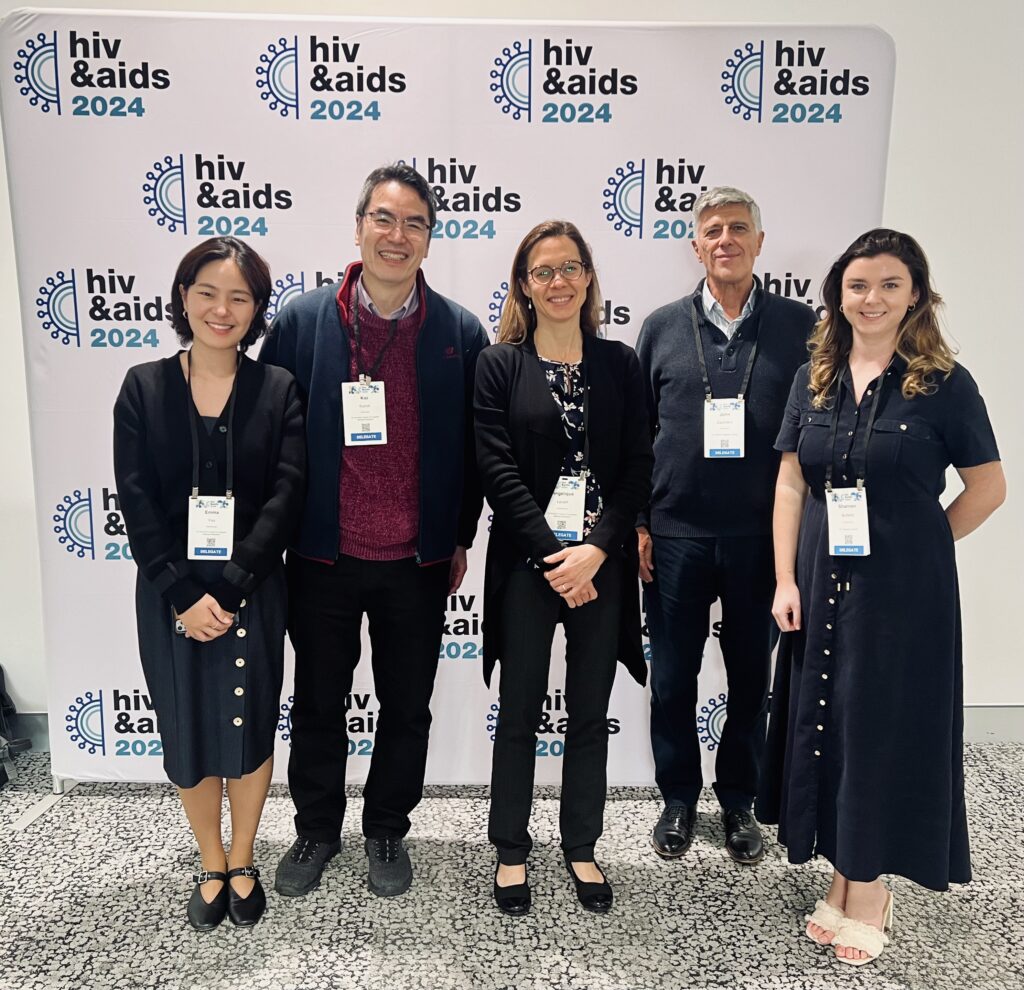
Australasian HIV&AIDS Conference 2024, ICC Sydney
(L-R) Emma Yoo, Dr Kazuo Suzuki, Angelique Levert, A/Prof John Zaunders, Shannen Butterly
St Vincent’s Clinic Research Foundation acknowledges the Gadigal and Bidjigal peoples of the Eora Nation as the Traditional Custodians of the land on which we stand, and we pay our respects to Elders past, present, and emerging.